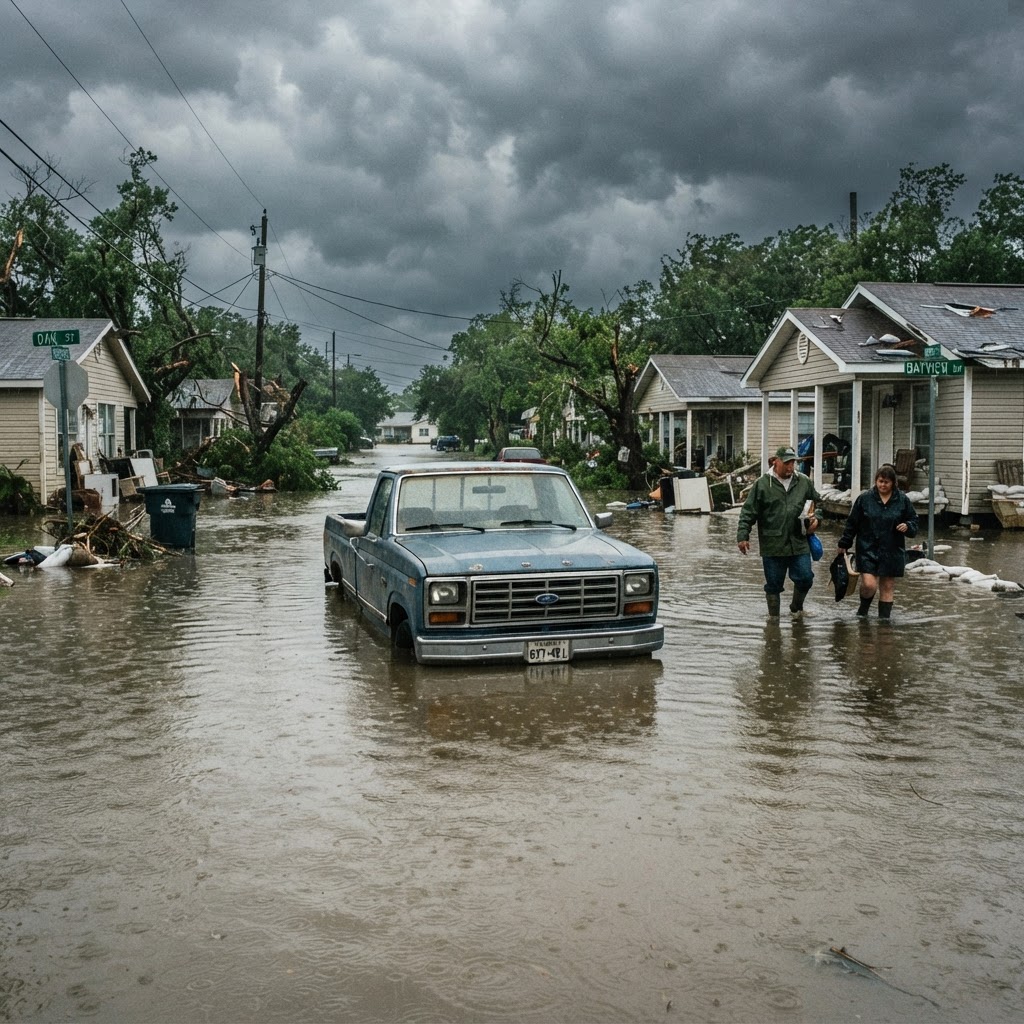
Living on the Gulf Coast means water finds vehicles — a hurricane surge, a stalled thunderstorm over Mustang Creek, or the street that always floods when the bayous back up. For vehicle owners in Alvin, Pearland, and the low-lying stretches of Brazoria County, a flooded car is one of the most common junk car situations there is.
The instinct is to dry it out and hope. Here is why that instinct is expensive, and why selling a flood-damaged vehicle to a local buyer is usually the smarter exit.
Have a broken-down truck, SUV, or junk car sitting in Alvin?
Call or text (346) 215-0925 for guaranteed local pickup today.
What Water Actually Does to a Vehicle
Freshwater flooding is bad; coastal flooding is worse because the water carries salt, sediment, and agricultural runoff. Once water passes the door sills:
- •Wiring and computers drown. Modern vehicles carry dozens of control modules under the seats and floor pan. Water intrusion corrupts them unpredictably, and problems surface months after everything seems dry
- •Corrosion begins immediately. Connectors, ground points, and fuse blocks oxidize from the first day — long after the carpet dries
- •Fluids are compromised. Water infiltrates engine oil, transmission fluid, and differentials, turning a running engine into a locked one with a single restart attempt
Flood Titles and Disclosure
Once an insurer brands a vehicle as flood-damaged, that brand follows the title forever. In Texas, that history must be disclosed in any retail sale — which crushes resale value and makes private buyers skittish. A flood-branded vehicle is very difficult to sell on the open market at any fair price, even when it appears to run.
Why Restoration Almost Never Pays
Add up the honest costs: professional water extraction and mold treatment, harness and module diagnostics, replacement modules (each one dealer-priced and programmed), corroded connector repair, plus the wildcards that keep appearing for a year. On an aging vehicle worth modest money to begin with, the repair path routinely costs multiples of the car's clean value. There is no scenario where that math rewards the seller who tries hardest.
Callout: Do not attempt to start, crank, or jump a flood-submerged vehicle — even to move it a few feet. Water in the cylinders can hydro-lock and destroy the engine outright, turning a salvageable vehicle into a shell. Leave it dead and let the flatbed winch handle it.
Salt Air Is the Slow Version of the Same Story
Even vehicles that never go underwater age faster on the coast. Salt-laden humidity attacks frames, brake and fuel lines, and body seams year after year. A twenty-year-old Alvin truck often carries far more structural corrosion than the same truck in Dallas — one reason local valuation accounts for coastal aging rather than just the odometer.
Selling the Flooded Vehicle
A junk buyer prices flood cars by weight and surviving parts: the converter if present, undamaged panels, heavy steel, and usable interior pieces above the waterline. The offer is honest and immediate, the flatbed retrieval is free, and payment is cash at pickup — the vehicle leaves as-is, no drying, no diagnosis, no disclosure gymnastics at the county office.
Frequently Asked Questions
Yes — typically more than owners expect. Steel, the catalytic converter, drivetrain cores, and surviving parts all carry value, and heavy trucks and SUVs flooded above the floor still command solid salvage pricing.